


SkinChronicles, No 15, August 2026, by Jennifer Lavina Ngo
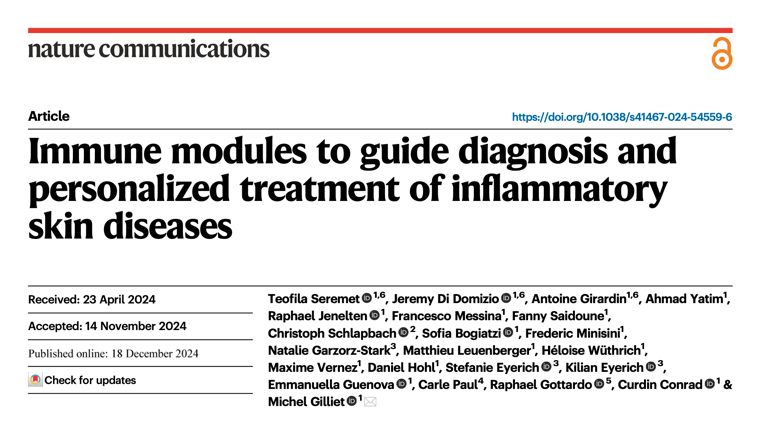
Inflammatory skin diseases can look similar clinically while being driven by different immune processes. Targeted therapies have transformed their management, but their effectiveness depends on matching treatment with each patient’s immune biology. Seremet et al. addressed this need by developing a module-based molecular map of inflammatory skin diseases using transcriptomic profiling of lesional biopsies. Rather than relying on single biomarkers, the authors identified seven functional immune modules—Th17, Th2, Th1, type I interferon, neutrophilic, macrophagic, and eosinophilic pathways—that helped classify inflammatory dermatoses and linked immune signatures to treatment-relevant targets.¹ The framework also helped resolve diagnostically challenging presentations, including erythroderma and undetermined rashes, where clinical and histopathologic assessment may be inconclusive. Beyond diagnosis, module matching improved therapeutic decision-making in both treatment-naïve and treatment-refractory patients. In atopic dermatitis lesions not responding to anti–IL-4Ra (dupilumab) therapy, the Th2 module decreased while a dominant Th1 module emerged, suggesting that treatment resistance may reflect an immune shift rather than inadequate drug effect alone. Notably, these patients achieved complete responses after switching to module-guided therapy with JAK inhibitor targeting Th1.¹
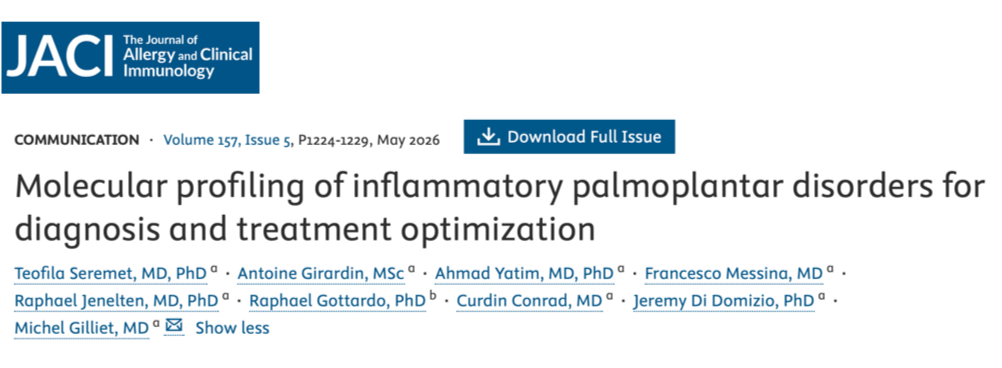
A subsequent study extended this framework to inflammatory palmoplantar disorders, where overlapping clinical and histopathologic features frequently complicate diagnosis. Molecular profiling separated chronic hand eczema, palmoplantar atopic dermatitis, palmoplantar psoriasis, and palmoplantar pustular psoriasis into four distinct molecular patterns.² The clinical implications were striking: clinical and molecular diagnoses were concordant in only 55% of cases, and treatment mismatches were associated with poor response. Conversely, realigning treatment with each patient’s immune signature improved treatment selection in refractory cases.²
Together, these studies bring precision dermatology closer to daily clinical practice. What makes them compelling is their relevance to patients whose disease falls outside clear clinical categories, where diagnosis and treatment decisions often remain uncertain. In recalcitrant palmoplantar disease, they shift the diagnostic lens from clinical appearance to the immune pathways beneath it. Molecular profiling then becomes more than a research tool: it clarifies difficult diagnoses, explains why treatment fails, and helps bridge the gap between what is seen clinically and what must be treated biologically.
References:
- Seremet T, Di Domizio J, Girardin A, Yatim A, Jenelten R, Messina F, et al. Immune modules to guide diagnosis and personalized treatment of inflammatory skin diseases. Nat Commun. 2024 Dec 18;15(1):10688. doi: 10.1038/s41467-024-54559-6.
- Seremet T, Girardin A, Yatim A, Messina F, Jenelten R, Gottardo R, et al. Molecular profiling of inflammatory palmoplantar disorders for diagnosis and treatment optimization. J Allergy Clin Immunol. 2026 May;157(5):1224-1229. doi: 10.1016/j.jaci.2026.01.011.

Assistant Specialty Center Head for Dermatology
Rizal Medical Center
Pasig City, Philippines