


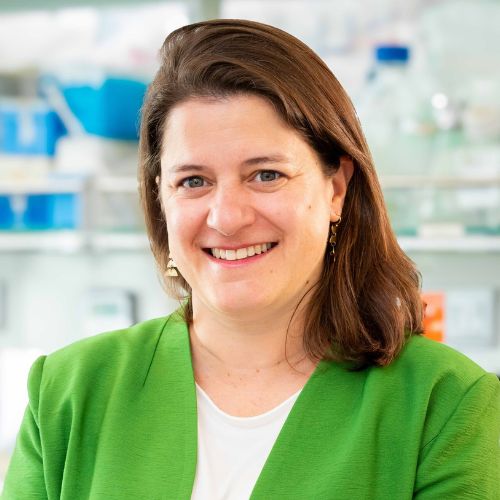
Inês Sequeira
Dr Inês Sequeira works at the interface of regenerative medicine and cancer biology, asking why some tissues heal without a scar and others do not — and how that answer can be turned into therapy. The oral mucosa is her central model: the one adult human tissue that repairs itself scarlessly.
She trained at Institut Pasteur, where lineage tracing and mathematical modelling established a new model of hair follicle stem cell behaviour, and subsequently with Professor Fiona Watt at King’s College London, mapping the genomic landscape and subclonal architecture of oral cancer. After her postdoc, she led the Dermis Physiology Research Group at L’Oréal Research & Innovation in Paris before establishing her academic laboratory at Queen Mary University of London in 2020 as Associate Professor and Deputy Research Director at the Institute of Dentistry. She will be taking the post of Group Leader and Vice-Director for Research at the NOVA Institute for Medical Systems Biology (NIMSB), Lisbon.
She has dedicated her research career to studying skin and oral epithelia homeostasis, wound healing and cancer. Her lab integrates single-cell and spatial transcriptomics and proteomics, tumour genome analysis, in vitro and in vivo models, organoid culture, multiplex imaging, and AI-based analysis to dissect tissue heterogeneity in health and disease. She has published in top-tiered journals, such as Nature, Nature Medicine, Nature Communications, Cell Stem Cell, and of course, JID.
A passionate advocate for team science, she co-founded the London Stem Cell Network and the QMUL Barts Centre for Squamous Cancer, leads the Human Cell Atlas Oral and Craniofacial Bionetwork, and established QMUL’s Spatial Biology Hub, to spark collaborations and accelerate discovery.
Inês has been part of the ESDR community for more than a decade now, having participated in the Future Leaders in Academia programme in 2018, and being selected to join the ESDR Leadership Mentoring Course